
By Diana Morgan
October is ADHD awareness month and as a writer with ADHD, I’d love to help bring more awareness to how we portray ADHD and other neurodivergent conditions in writing and media. If you’re plugged into any social media lately you’ve probably run into at least one creator whose content revolves around ADHD or autism. It’s a hot topic, thanks to new diagnostic standards and the special community that forms on social media platforms.
Neurodivergent identity has been stigmatized for a long time. Autism, ADHD, bipolar, and other brain differences were hidden or avoided, leaving people with shame and nowhere to look for representation.
But things have changed. From Sheldon Cooper in Big Bang Theory to Abed Nadir in Community, more and more characters are showing up and giving the neurodivergent community the representation it needs.
Authors like Helen Hoang and Talia Hibbert, who are both autistic, have started including autistic characters in their romance novels showing the complexities disability gives to a relationship. In sci-fi authors like Ada Hoffman and Corrine Duyvis are exploring how science and disability rights can affect the future in new ways.
In my Lost Colony series, I have two neurodivergent characters. Jacob Moorland has AudHD (ADHD and autism combined) and in the upcoming sequel, there will be a new character names Henry with autism.
It’s exciting new territory for those of us who grew up in a world where our conditions were often shamed. I was diagnosed as a child and grew up in the 90s when ADHD hadn’t been studied in girls. Growing up, I rarely saw characters with ADHD in the media and when I did, they were highly exaggerated or stereotypical. Boys who were “walking disasters,” running wild and being destructive; non-verbal girls who could only repeat songs they heard on the radio. It gave an inaccurate idea of what ADHD and autism can look like and further stigmatized our differences.
Like any good representation, progress is slow, and mistakes are made, but we must keep trying to improve. If you’re a writer who is interested in writing better, more realistic neurodivergent characters, here are a few tips to get you started.
This is also a good time to say that I am not a medical professional, I’m just a writer who’d lived their whole life with ADHD (diagnosed at 5 years old), raised an autistic ADHD child, and spent a lot of time with the neurodivergent community learning about being an advocate. I’m still learning, but one thing I do know about is writing, and I want to help other writers.
- Neurodivergent is NOT just autism and ADHD. It’s also bipolar disorder, Tourette’s, Down’s Syndrome, dyslexia, dyscalculia, dysgraphia, borderline personality disorder, and a host of other brain differences.
- Be mindful of what terms you use. A lot of things have changed about how autism and ADHD are diagnosed over the last few decades, as such so have the terms used to describe people with those diagnoses. Terms like ADD (Attention Deficit Disorder) and Asperger’s are outdated and in some ways offensive. Depending on your story’s setting and time period, you need to be mindful about what terms you use.
- This also goes for slang. Like any community, a few slang terms have cropped up in recent years. Words like “neurospicy” and “the ‘tsim” have gotten popular, but people are divided on how they feel about them. Some people think neurospicy is fun and empowering. Others find it infantilizing and demeaning.
- Autism/ADHD/disability is a superpower or they have a superpower that “cures” the disability. This is disrespectful at best and can be offensive if done badly. Disability doesn’t need a cure or magic powers, it needs acceptance.
- Neurodivergent is not a monolith. Even people who have the same diagnosis will have vastly different presentations and symptoms. Many neurodivergent conditions are also co-morbid. ADHD and autism frequently appear together, they are also often accompanied by dyslexia, dyspraxia, anxiety, and depression.
Good representation takes time and a willingness to learn, but we can all do more to help neurodivergent representation improve. If you are interested in including more characters with autism, ADHD, or other disabilities, do your research, listen to advocates with those disabilities, and whenever possible hire a sensitivity reader.
If you’re interested in more ADHD content and resources, check out the resources page on my website dianamorganauthor.com, or find me on any of my socials @dianamorganauthor
Keep writing and I’ll see you among the stars.
DIANA MORGAN is a superhero by day, writer by night. Okay, not really, but when she’s not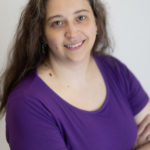 writing books, she’s a librarian at a local library, which is kind of a superhero. Her superpowers include always knowing what kids like to read, being able to read more than 10 books at one time, and the ability to eat more pizza than anyone.
Diana has always loved science fiction and fantasy. She grew up watching Quantum Leap, Power Rangers and Star Wars. She can’t remember a time when she wasn’t making up stories.
She was a geek before being a geek was cool, and she loves hanging out with other geeks and sharing her love of all things space and magic and books.
 continues with the recent Mother of Centuries. His work has appeared in The Twilight Zone Magazine, Eldritch Tales, National Lampoon, River Styx, Tornado Alley and the anthology A Treasury of American Horror Stories, which also included stories by Stephen King, Richard Matheson and H.P. Lovecraft. He has written extensively on historical and arts-related subjects and has been a guest lecturer in fiction at Washington University in St. Louis. He is a lifelong Bigfoot enthusiast, and Annette: A Big Hairy Mom is his first novel for young readers.
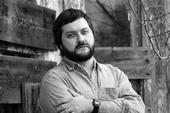 STEVEN L. SHREWSBURY lives, works, and writes in rural Illinois. More than 360 of his short stories have appeared in print or electronic media, along with more than 100 poems. Nine of his novels have been released, with more on the way. His books run from sword & sorcery (Overkill, Thrall, Bedlam Unleashed) to historical fantasy (Godforsaken) extreme horror (Hawg, Tormentor, Stronger Than Death) to horror-westerns (Hell Billy, Bad Magick, and the forthcoming Last Man Screaming). He loves books, British TV, guns, movies, politics, sports and hanging out with his sons. He’s frequently outdoors, looking for brightness wherever it may hide.