By Kathy S. Brown
The Story of Us
Unless we are some sort of Zen master of mindfulness, for good or ill most of us walk around all day immersed in the story in our head. We converse with ourselves or imaginary people. We react to events, parse their meaning, and fit them into patterns of our own creation. Each of us stars in our own story for an audience of one.
The late neurologist Oliver Sacks has written extensively on the subject. We seem to be hardwired to find patterns and impose sense on this narrative we call life. We unconsciously amend the objective facts to make a “better” story: More dramatic, more interesting, or just to “earn the ending.” Events really can’t be random and meaningless, right? And that pattern-finding instinct comes into play as we see images in random patterns, from clouds to grilled tortillas.
We Love Some Oxytocin
Human brains produce oxytocin, aka “cuddle hormone,” when we feel trusted or receive a kindness. It increases our empathic abilities–insight into other people’s emotional states–and thus makes cooperation more likely. (Fun fact: Oxytocin triggers the let-down reflex for nursing mother’s milk flow.) Dr. Paul Zak’s brain chemistry research at Claremont Graduate University took blood from test subjects before and after they heard a narrative.
Character-driven stories were associated with increased oxytocin levels. And more oxytocin is associated with more cooperation. Researchers have found stories—”experiential products”—provide happiness, just like real-life experiences.
“Collaborate or Die”
Proto- and early humans had to get it together, literally, or die. An individual naked ape had little chance in the wild. One thesis of social development cites the power of empathy—internalizing another creature’s observed experience and reacting to it as one’s own. This instinct lead to banding together and cooperative behavior. It helped all member of the group get “on the same page,” as it were. Early cave paintings hint at an oral tradition of storytelling that harnessed the group’s experience: A powerful bonding tool.
The Power of Story
As biologist Nathan Lents points out, “We cannot feel empathy for data.” A character-driven, emotional rich narrative is remembered more accurately later and is more likely to change behavior. Marketers and educators tap this aspect of human psychology. When I was in graduate school, I used a case study for a presentation on health behavior principles. My patient had worked hard as a coal miner all his life. He’d played hard, too. He loved the nightlife, beer, and cigarettes. When we meet, he had end-stage lung disease. Medicines were barely helpful, and the disease would slowly but inevitably destroy his lungs, each breath a labored gasp. But then, he was put on the wait list for lung transplant.
See what I did there? This expository piece turned into a story about a poor dude who couldn’t breathe. Maybe it’s a little more interesting now, as the oxytocin-driven empathy kicks in.
Because story links directly with our emotions, the connection is stronger and faster. The facts don’t have to convince us of the superiority of a particular brand of chewing gum: when we see a sweet, one-minute story about a man, his growing daughter, and the bond between them symbolized by a chewing-gum wrapper collection, we not only want gum, we also want the “gum experience” of love and family devotion.
This blog was originally published on 6/7/2019 at The Storytelling Blog.
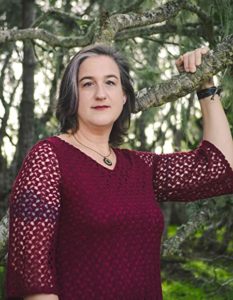
KATHY L. BROWN lives in St. Louis, Mo. and writes speculative fiction with a historical twist. Her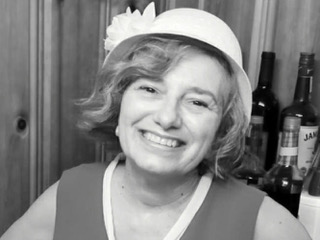 hometown and its history inspire her fiction. When she’s not thinking about how haunted everything is, she enjoys hiking, crafts, and cooking for her family. Montag Press published the first novel in her Sean Joye Investigations book series in 2021. Follow her social media platforms: Instagram at kathylbrownwrites, Facebook at kbKathylbrown, and Twitter at KL_Brown. The Storytelling Blog lives at kathylbrown.com.




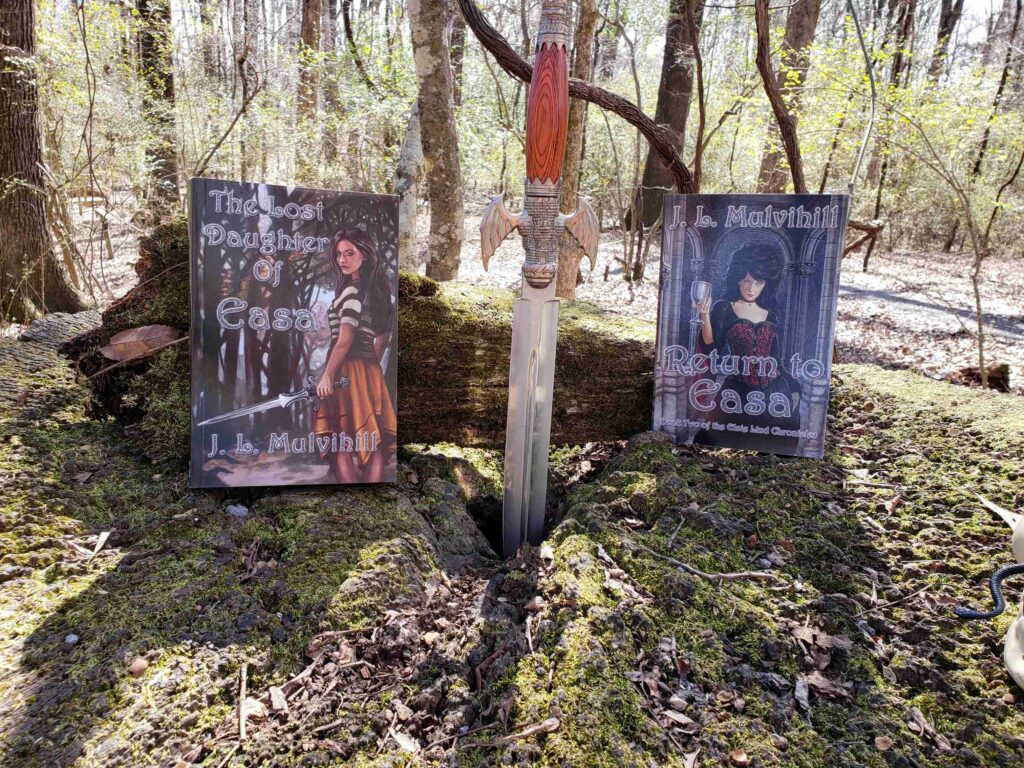
 A California native born in Hollywood, California, J.L. MULVIHILL wanted to be a rock star. After several years of modeling, acting, and singing, she decided to marry, have a family, and moved to a quieter life in Mississippi where she has lived for the past twenty years. Finding she has a gift for story telling she began to write young adult books, including the Steel Roots series and The Lost Daughter of Easa. She is very active in the writing community, a member of the Society of Children’s Book Writers and Illustrators, Gulf Coast Writers Association, Imagicopter, the Mississippi Writers Guild and Clinton Ink-slingers Writing Group. She continues to write fantasy, steampunk, poetry and essays inspired by her life in the South.
 writing books, she’s a librarian at a local library, which is kind of a superhero. Her superpowers include always knowing what kids like to read, being able to read more than 10 books at one time, and the ability to eat more pizza than anyone.

 immediately plunged into the low-stakes world of entry-level executive assistantship. Her unexpected journey out of that world and into the military is chronicled in her self-published book Echoes and Premonitions. Rachel served five years as a combat journalist, including two tours in Iraq, and a brief stint as a columnist for her hometown newspaper. After her second tour, she attended graduate school at the University at Albany in NY, where she earned her M.A. in political communication, and her commission as a second lieutenant in the military police corps.